Draft solicitation 80JSC026R0021DRFP, NAICS 336414, comments due 24 July 2026 at 8:00 a.m. Central. An industry briefing follows on 9 July at Johnson Space Center.
02 Two more Los Angeles-County launch companies join NSSL Phase 3 Lane 1.Impulse Space of Redondo Beach and Relativity Federal of Long Beach, each on a $5.6 billion shared-ceiling IDIQ.
03 GAO priced the cost of a payload subcontractor overrun.Next Gen OPIR GEO is running roughly $340 million over at the mission-payload subcontractor level.
04 A Ventura County place-of-performance shows up on the daily contract list.Corvid Technologies, Port Hueneme, a $9.25 million suborbital vehicle award.
05 CLDC is the door that is still open — comments close 24 July, 8:00 a.m. Central.
Notes from the co-founders
A draft request for proposals is one of the principal formal moments when a supplier below the prime tier can still change the document. The comment window in this issue is eighteen days, and most shops will let it pass without a word.
A comment identifying a requirement that no domestic supplier can currently meet is not a complaint. It is intelligence the government asks for and rarely receives from this level of the base. This issue exists to make that window visible while it is still open. If you intend to file and want another set of eyes on it, ask.
One capability card, from every member company, to Diego F. Padilla at diego@rakarinc.com, by Tuesday, 1 September 2026, 5:00 p.m. PT. One page: certifications held with expiry dates, processes performed in-house, maximum part envelope, current lead time, and one named federal or prime customer you are already qualified to. No brochure, no capabilities deck, no company history.
Cards received before the monthly AMA are reviewed on that call; cards arriving after it are worked in the cycle that follows. They are read against the solicitation language in Standing Watch, and where a relevant and consenting contact exists the cluster offers a named introduction. Cards not received are not matched. That is the entire mechanism.
NASA opens the comment window on Commercial LEO Destinations Phase 2
A draft RFP coded to guided-missile and space-vehicle manufacturing. A comment deadline eighteen days out. An industry briefing at Johnson Space Center three days after posting. This is the moment in a procurement's life when a small supplier's comment can still change a requirement, before it hardens into a final solicitation no one can unwind.
NASA posted the draft Request for Proposals for the second phase of Commercial LEO Destinations on 6 July 2026, under draft solicitation 80JSC026R0021DRFP. Comments are due 24 July 2026, 8:00 a.m. Central, and NASA will hold an industry briefing at Johnson Space Center on 9 July. The instrument is coded to NAICS 336414 — guided missile and space vehicle manufacturing — which is as direct a signal as a solicitation number ever sends a California machine shop.
Framing figure — Frank Malina
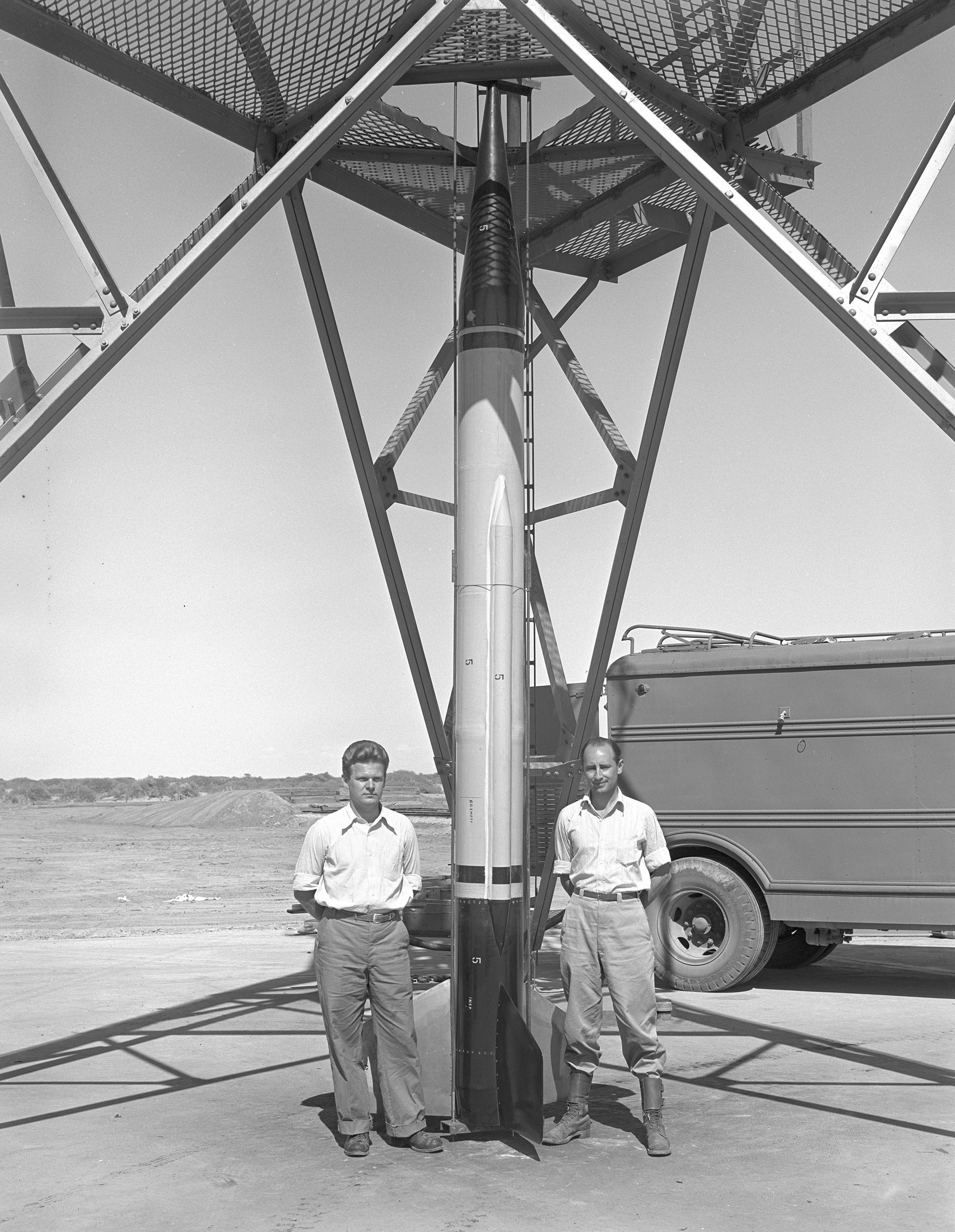
Frank Malina was born on 2 October 1912 in Brenham, Texas, graduated from Texas A&M in 1934, and moved to the California Institute of Technology on a fellowship, where he took master's degrees in mechanical and aeronautical engineering before beginning doctoral work on rocket propulsion under Theodore von Kármán. In 1936 Malina helped form the GALCIT Rocket Research Project, whose graduate-student experiments in the Arroyo Seco riverbed above Pasadena led to his 1940 Ph.D. thesis on rocket-propulsion theory and, in 1943, to the site's adoption of the name Jet Propulsion Laboratory. Malina served as JPL's acting director from 1944 to 1946.
The draft RFP window: CLDC Phase 2 and the week around it
A commercial-space-station procurement opens for comment. Two more Los Angeles-County launch companies clear a national-security bar. A federal oversight report prices what a payload subcontractor overrun actually costs. Read together, they are one week of the same industrial base.
One — NASA posts the CLDC Phase 2 draft RFP
NASA posted the draft Request for Proposals for the second phase of its Commercial LEO Destinations program on 6 July 2026, under draft solicitation 80JSC026R0021DRFP. Comments are due 24 July 2026, 8:00 a.m. Central, and NASA has scheduled an industry briefing at Johnson Space Center on 9 July 2026. The draft carries NAICS 336414 — guided missile and space vehicle manufacturing — the same code under which Aerojet was classified decades after its 1942 founding, and the clearest signal in this issue of what kind of vendor NASA expects to answer the final RFP.
A draft RFP is not a solicitation a supplier bids. It is the one point in the acquisition cycle where an agency is still asking industry to tell it what the requirement should say. Comments filed against a draft can move definitions, delivery schedules, evaluation factors and set-aside structure before any of it is fixed in the document that actually carries award weight. Once the final RFP posts, that influence narrows sharply, though questions and amendments can still change the solicitation. The next date on this instrument to track is whatever date NASA sets for the final RFP after reviewing the comments due 24 July.
The program this draft RFP serves is intended to procure commercial low-Earth-orbit destination services for NASA’s transition from the International Space Station: a commercial low Earth orbit destination NASA intends to buy as a service rather than own as a facility. A NAICS code for space-vehicle manufacturing attached to that program's second phase means the buy includes structure, pressure vessels, life-support hardware and the kind of close-tolerance fabrication a California AS9100-D shop already performs for other primes. The reading for this readership: file a comment if there is a requirement in the draft that assumes a capability your shop does not have, or a schedule that assumes a lead time your shop cannot meet. That is what the comment period is for.
Two — The Los Angeles launch basin gets two more members
On 7 July 2026, Impulse Space of Redondo Beach and Relativity Federal of Long Beach were added to the Space Force's National Security Space Launch (NSSL) Phase 3 Lane 1 roster, under solicitation numbers FA8811-26-D-B001 (Impulse) and FA8811-26-D-B002 (Relativity Federal). Both awards sit inside a firm-fixed-price IDIQ carrying a $5.6 billion shared ceiling across all Lane 1 providers, and each company receives an initial $5 million task order for a capabilities assessment and a tailored mission-assurance approach. They join SpaceX, United Launch Alliance and Blue Origin, admitted in fiscal 2024, and Rocket Lab and Stoke Space, admitted in fiscal 2025.
Two more Los Angeles-County companies now hold national-security launch contracts. For a California supplier, a new Lane 1 entrant may need to add or requalify suppliers from the ground up — mission-assurance requirements, first-article inspection, traceability and NDT documentation all have to be established before a young launch provider can fly a national-security payload, and that qualification work is where a machine shop's business-development effort belongs, not in trying to sell to the prime after its supply chain is already fixed.
Three — GAO prices the subcontractor overrun
The Government Accountability Office released its annual assessment of major defense acquisition programs on 2 July 2026. The report put the acquisition cost of the Next Generation Overhead Persistent Infrared (Next Gen OPIR) GEO program at $9.5 billion, with roughly $340 million of that growth traced to the mission-payload subcontractor. Next Gen OPIR Polar was assessed at $5.9 billion, with first launch expected in 2028. Protected Tactical Satcom-Global was assessed at $2.9 billion for 24 satellites. The report also noted that the decision to cancel the OCX ground-control program was made in late 2025 but not disclosed publicly until April 2026, and that NSSL now expects on the order of fifty Phase 3 missions.
A $340 million overrun booked at the payload-subcontractor level is not an abstraction for a mid-tier supplier — it is the kind of cost growth that can prompt a prime's procurement organization to re-examine its subcontractor base, tighten statements of work and, in some cases, open the door to a second qualified source. No sourcing action has been announced. Read this report as a map of which programs are large enough and troubled enough that a prime may be looking to requalify or diversify its supply chain within them.
Four — A Ventura County place of performance, and the smaller signals of the same week
On 7 July 2026, Corvid Technologies was awarded a $9.25 million suborbital vehicle contract with place of performance at Port Hueneme, California, in Ventura County — the closest thing in this window to a hardware program actually sited in the readership's own county. The same day brought a $105 million Lockheed Martin award for GPS modifications, sustaining a steady flow of space-segment subcontract work, and a $499.57 million Missile Defense Agency award to L3Harris/Aeromet for sensor and airborne work, which expands the missile-defense supplier base at a scale that reaches well below the prime.
On 6 July 2026, Canyon Consulting of El Segundo was awarded a $49.68 million Air Force Research Laboratory satellite-navigation contract — a local systems-engineering house winning AFRL work is a teaming opportunity for a shop that does not sell directly to the government. And on 7 July 2026, Firefly Aerospace won a roughly $13 million subcontract from NASA's Jet Propulsion Laboratory in Pasadena to produce the aeroshell for the SkyFall Mars mission — a structural and thermal-protection build that is precisely the composite, machining and bonding scope this readership is built to perform, awarded by the institution profiled below.
Orbit Fab also named a new chief executive, Peter Shaper, on 7 July 2026 and raised more than $25 million in interim funding from Stride Capital while targeting a $30–50 million Series B, disclosing a refuelling-contract backlog above $40 million and three demonstration missions expected to fly within 18 to 24 months. Fluid-transfer demand on that timeline reaches the same valve, fitting and seal suppliers this briefing has tracked since orbital logistics first appeared as a procurement line.
FIELD SIGNAL / COMMERCIAL LEO DESTINATIONS“Industry believes it can meet the timelines and that a viable commercial marketplace exists where NASA is one customer among many. We’re focused on supporting those efforts, enabling the capabilities that make this transition possible.”
— JARED ISAACMAN, NASA ADMINISTRATOR · STATEMENT ON THE CLDC PHASE 2 DRAFT RFP, 6 JULY 2026 · REPORTED BY NASA
Teaming Desk
The entries below are drawn from the CLDC Phase 2 draft RFP's own NAICS classification and from the Week's contract awards, not from our assessment of where the gaps are. Members who perform any of this work should reply to this issue before the 24 July comment deadline. We are not asking whether you are interested. We are asking whether you can hold the tolerance.
Sought — pressure-vessel and structural fabrication under NAICS 336414. The CLDC Phase 2 draft RFP carries the guided missile and space vehicle manufacturing code. Suppliers who can document AS9100-D process control against that code have standing to comment before 24 July 2026.
Sought — aeroshell and thermal-protection structures. Firefly Aerospace's 7 July 2026 subcontract with NASA JPL for the SkyFall aeroshell is a composite lay-up, bonding and machining scope. Second-tier capacity behind that award has not yet been named.
Sought — mission-assurance and NDT documentation for new launch entrants. Impulse Space and Relativity Federal, newly added to NSSL Phase 3 Lane 1 on 7 July 2026, have not published Lane 1-specific supplier requirements or sourcing plans.
Sought — fluid-transfer hardware for orbital refuelling. Orbit Fab's disclosed backlog exceeds $40 million against three demonstration missions expected within 18 to 24 months of 7 July 2026. Valve, fitting and seal capacity is the relevant scope; no limiting supply-chain constraint has been publicly identified.
·Offered — qualification and certification support. Cluster members holding AS9100-D and ITAR registration who can act as a qualified source for teams that hold a technology but not a compliant production path.
·Offered — AS9100-D thermoset molding and precision machining capacity. See the member profile below.
Momentus Inc.
San Jose-based, NASDAQ-listed (MNTS) provider of in-space transportation, satellite buses and in-orbit infrastructure, formed through the August 12, 2021 business combination of Stable Road Acquisition Corp. and Momentus Inc.
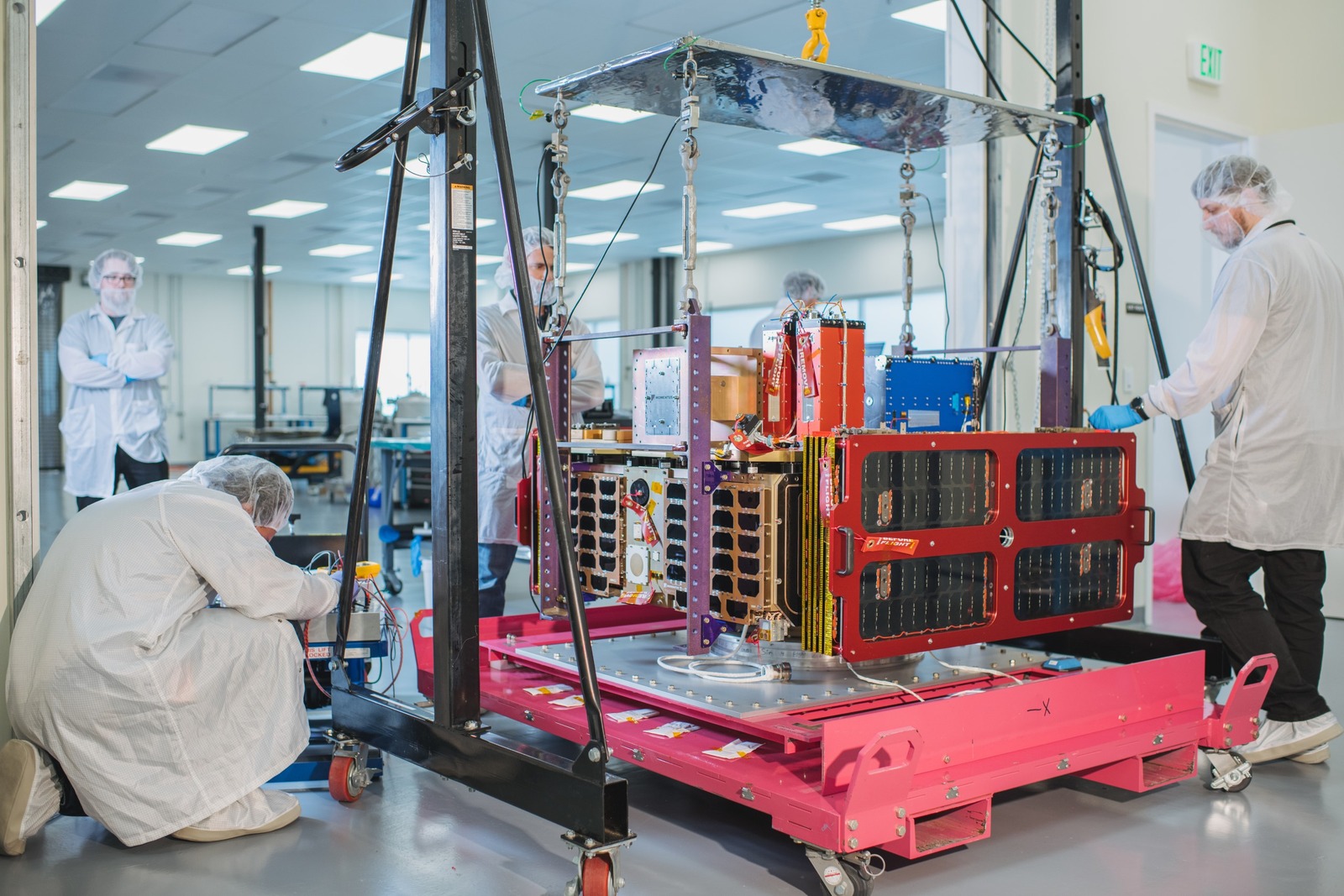
Momentus Inc. traces its public listing to a Delaware entity incorporated in May 2019 as Stable Road Acquisition Corp., which completed its business combination with the operating company Momentus Inc. on August 12, 2021; a founding year for the operating business itself is not established in filings reviewed. Headquarters address differs by source: the company website lists 3901 N. First Street, San Jose, CA 95134, while its 2026 Form S-3 and the EDGAR index for its FY2025 Form 10-K, filed March 31, 2026, both give 1762 Automation Parkway, San Jose, CA 95131; both addresses are reported here as found. In March 2026 the company moved into a 61,100-square-foot San Jose headquarters, expanding clean-room, research and manufacturing space from 4,500 to 16,000 square feet and adding a Mission Control Center. As of June 8, 2026 it reported approximately US$76 million in cash, no debt, and 16,983,959 shares outstanding.
Product lines named in filings are the Vigoride orbital service vehicle in M-500 and M-1000 variants, the Microwave Electrothermal Thruster water-propellant propulsion system at Technology Readiness Level 9, and the Tape Spring Solar Array, alongside satellite and satellite-bus builds for government customers. Vigoride 7 launched March 30, 2026 on a SpaceX Falcon 9 Transporter-16 mission carrying ten payloads, including the ASTRA payload flown under a DARPA contract and built by Caltech, and a Velo3D-printed titanium propellant tank; the vehicle executed more than 30 water-propulsion burns at roughly 517 km altitude. A SpaceWERX rendezvous-and-proximity-operations sensor demonstration remains pending, and Vigoride 8 is fully subscribed with two NASA payloads for a 2027 flight. Across four missions to date the company has deployed 17 customer satellites.
Government work dominates the backlog: approximately US$4.2 million from DARPA, US$1.9 million from SpaceWERX, US$5.1 million from NASA under the COSMIC program and US$2.5 million from NASA under RDRE. The company also reports selection onto the Missile Defense Agency’s SHIELD indefinite-delivery/indefinite-quantity vehicle, which carries a ceiling of US$151 billion over ten years and is tied to the Golden Dome program; that figure is the ceiling value of the multi-vendor IDIQ vehicle itself, not an award or revenue commitment to Momentus, and should not be read as money awarded to the company. Momentus forecasts 2026 revenue of US$10.0 million, against US$1.1 million in 2025. On February 12, 2026 it announced receipt of approximately US$1.9 million during January 2026 from NASA and AFRL/SpaceWERX programs covering an RPO sensor suite, a CisLunar power processing unit, SpaceWorks COSMIC and the Juno RDRE, and it separately won a 2025 SpaceWERX Direct-to-Phase-II SBIR for a rendezvous-and-proximity-operations sensor suite.
Capital Flows
Where committed federal money moved in the week of 1–7 July 2026, and what it buys downstream.
Bars are proportional. The NSSL Phase 3 Lane 1 figure is a shared ordering ceiling across all providers, not money awarded to any one of them; the initial task orders were $5 million each. The other three lines are awarded contract values.
Two Department of Defense contract announcements, dated 6 and 7 July 2026, carried the largest disclosed dollar figures of the week. L3Harris/Aeromet was awarded $499,570,000 by the Missile Defense Agency. Lockheed Martin was awarded $105,000,000 for GPS modifications. Canyon Consulting of El Segundo, California, was awarded $49,680,000 by the Air Force Research Laboratory for satellite-navigation work — the clearest California-sited figure in the group, and a systems house whose subcontract needs are worth tracking. Corvid Technologies was awarded $9,250,000 for a suborbital vehicle contract performed at Port Hueneme, Ventura County.
Against those figures, the newly expanded NSSL Phase 3 Lane 1 IDIQ carries a $5.6 billion shared ceiling across all providers, with Impulse Space and Relativity Federal each starting from an initial task order of $5 million for a capabilities assessment. The ratio is the same one this newsletter has tracked before: a small qualifying task order sits in front of a ceiling several orders of magnitude larger, and the qualification work is where the sub-tier opportunity concentrates before the ceiling is ever approached.
The GAO's 2 July 2026 annual assessment of major defense acquisition programs put the Next Generation Overhead Persistent Infrared GEO program's acquisition cost at $9.5 billion, with approximately $340 million of cost growth attributed to the mission-payload subcontractor. Next Gen OPIR Polar was assessed at $5.9 billion. Protected Tactical Satcom-Global was assessed at $2.9 billion for 24 satellites. These are the programs large enough, and now visibly troubled enough, that a prime's sourcing decisions on them are worth watching through the rest of 2026.
On the private-capital side, Orbit Fab disclosed on 7 July 2026 that it had raised more than $25 million in interim funding from Stride Capital while targeting a $30–50 million Series B, against a disclosed refuelling-contract backlog above $40 million. Separately, EchoStar's DISH DBS satellite-television and wireless subsidiaries filed for Chapter 11 bankruptcy protection on 1 July 2026 — a reminder that demand-side capital in this sector runs in both directions, and that a supplier's exposure to a single downstream customer is a concentration risk worth pricing.
Tuesday, 1 September 2026
11:00 AM Pacific · 45 minutes · in person & virtual
Ask Me Anything. Direct engagement with the cluster co-founders on programs, teaming, and the California space supply chain. Open to entrepreneurs, engineers, researchers, and anyone working in or near the space economy.
1680 Universe Cir
Oxnard, California 93033
Cadence · first Tuesday of every month · 11:00 AM Pacific · recurring. Capability cards submitted by 5:00 PM Pacific the day of the call are worked in the cycle that follows. By-Laws & Capability Statement at spacereturn.org.
Build the cluster with us.
SpaceReturn///// the California Space Cluster is a membership body of California space and aerospace manufacturers, operators, test facilities and service providers. Membership enquiries: diego@rakarinc.com.
Linked public record
- CLDC Phase 2 draft RFP, Solicitation 80JSC026R0021DRFP — SAM.gov
- NASA seeks industry input on second phase of commercial space stations, 6 July 2026 — NASA
- NASA releases CLD draft RFP, 7 July 2026 — Payload
- DoD contracts for 7 July 2026 — war.gov
- DoD contracts for 6 July 2026 — war.gov
- GAO flags satellite costs, launch risks in Space Force portfolio, 4 July 2026 — SpaceNews
- Firefly Aerospace to produce shell for NASA's SkyFall mission, 7 July 2026 — Aviation Week
- Orbit Fab hires new CEO and raises funding, 7 July 2026 — SpaceNews
- EchoStar's satellite-TV and wireless subsidiaries file for bankruptcy, 1 July 2026 — SpaceNews
- SDA notice of intent, sole-source IDIQ, SDA-SN-26-0013 — SAM.gov
- Kronos Family of Systems CSO, FA8806-26-S-0001 — SAM.gov
- NASA Flight Opportunities (FO4) ceiling increase — SAM.gov
Method & colophon
Figures are drawn from primary records wherever a primary record exists — a solicitation notice, an appropriations document, a regulatory filing or an official release — and from identified secondary reporting where one does not. Every source is linked in the column alongside. Where two sources disagree, the disagreement is printed rather than resolved silently. Conclusions the record does not itself state are hedged, or marked as cluster assessment.
- Published by
- SpaceReturn///// The California Space Cluster
- Co-publishers
- Theresa Padilla-Chaparro · Diego Padilla
- Compiled from
- Primary records and identified reporting, linked alongside
- Member contributions
- None in this issue — submissions welcome
- Corrections
- info@spacereturn.org
- Dateline
- Tuesday, 1 September 2026 · Oxnard, California
Framing figure sources
- Frank Malina biography — Caltech GALCIT, Legends of GALCIT
- Aerojet — Wikipedia
- History of the Aerojet Engineering Corporation — NASA Technical Reports Server
- Aerojet marks 70 years, founding date 19 March 1942 — Space Foundation
- Jet Propulsion Laboratory history and directors — NASA
- JPL institutional history — NASA JPL
- JPL — Who We Are — NASA JPL
- Jet Propulsion Laboratory — Wikipedia
- Dr. Frank J. Malina, 1912–1981 — NASA JPL, Faces of Leadership
Use this briefing.
Forward it to one supplier who is not yet a member.
Member capability card. Standing module. Members may submit or update a capability card at any time; the one-page format set out above is the current standard.
Mailing address: *|LIST:ADDRESS|*
The Space Observer and its contents are sponsored by Rakar, Incorporated. To place advertising or sponsor a section, contact marketing@rakarinc.com. Public-record items are linked to open agency or publisher postings. Member-private items require express permission before publication. This briefing is informational only and is not legal, investment, export-control or procurement advice; verify all deadlines, eligibility and solicitation terms with the issuing authority before acting. © 2026 SpaceReturn///// The California Space Cluster.